
Books: Most Recent
THE GOLDEN AGE OF PIRACY
The truth behind the great pirate myths and legends of the Golden Age from 1655-1725.
The history of pirate myth is rich in action, at sea and ashore. However, the truth is far more interesting. In The Golden Age of Piracy, expert pirate historian Benerson Little debunks more than a dozen pirate myths that derive from this era—from the flying of the Jolly Roger to the burying of treasure, from walking the plank to the staging of epic sea battles—and shows that the truth is far more fascinating and disturbing than the romanticized legends.
In print, in bookstores and online in hardcover, trade paper, and ebook! Recently ranked as high #21 on Kindle and #2 in Military History in iBooks!
FORTUNE’S WHELP
In Print, available at Amazon and Barnes & Noble! Get it HERE!
From the publisher: Set in the 17th century during the heyday of privateering and the decline of buccaneering, Fortune’s Whelp is a brash, swords-out sea-going adventure. Scotsman Edward MacNaughton, a former privateer captain, twice accused and acquitted of piracy and currently seeking a commission, is ensnared in the intrigue associated with the attempt to assassinate King William III in 1696. Who plots to kill the king, who will rise in rebellion—and which of three women in his life, the dangerous smuggler, the wealthy widow with a dark past, or the former lover seeking independence—might kill to further political ends? Variously wooing and defying Fortune, Captain MacNaughton approaches life in the same way he wields a sword or commands a fighting ship: with the heart of a lion and the craft of a fox.
28 July 2015: Benerson Little has turned in the final draft of “Fortune’s Whelp” and the staff is damn excited. Michael James declared it “full of action, pirates, treason, wry humor, women, and gunpowder and swords.” Watch for it soon!
Books: History
THE SEA ROVER’S PRACTICE:
PIRATE TACTICS AND TECHNIQUES, 1630-1730
“As colorful as a Howard Pyle illustration and as compelling as an Errol Flynn film, The Sea Rover’s Practice belongs on anyone’s short list of useful scholarship on the great age of piracy. Based largely on first-person accounts, the book provides a trustworthy description of how pirates, filibusters, buccaneers, and privateers went about their business, from planning and recruiting, through chasing, engaging, and boarding, to dividing the spoils. The reader, entertained as well as informed, is likely to have nearly as much fun reading this book as the author appears to have had in writing it.”
—Michael J. Crawford, The Autobiography of a Yankee Mariner.
. . . .rich in colourful detail, and displays impressive knowledge of sailing and fighting skills.”
—The Naval Review
In print, trade paper, ebooks, and audiobook. The hardcover edition is out of print.
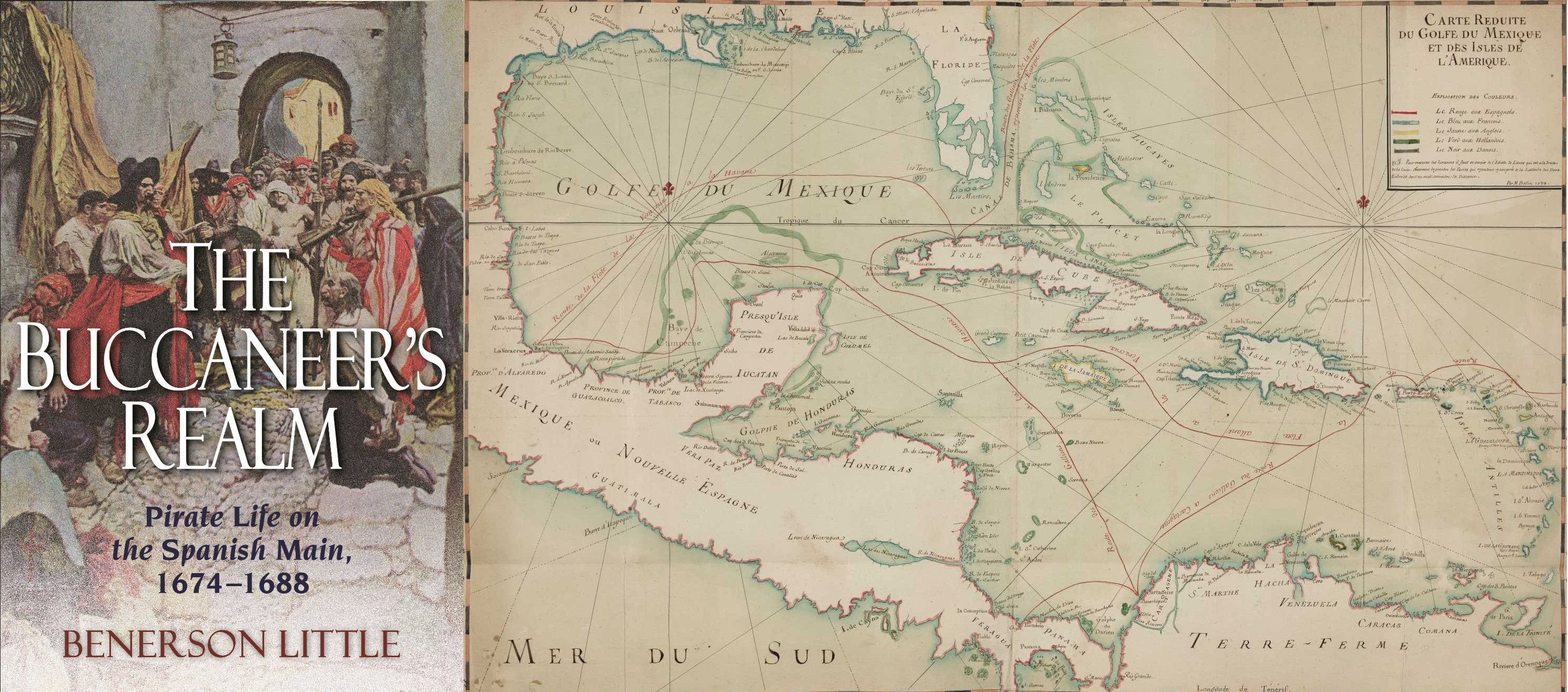
THE BUCCANEER’S REALM:
PIRATE LIFE ON THE SPANISH MAIN, 1674-1688
To really understand what the buccaneers’ world was like—how they lived, fought, and died.
“A richly hued blend of compelling narrative and informed history, The Buccaneer’s Realm captures the dramatic sunset of buccaneering on the Spanish Main. With meticulous documentation, wry humor, and keen attention to detail, Benerson Little accurately portrays the last hurrah of the Brethren of the Coast—a free-minded floating society of patriotic mercenaries and self-serving rogues, accomplished sailors, and intrepid adventurers—before their final eclipse into unmitigated piracy.”
—Peter R. Galvin, Patterns of Pillage
“The Buccaneer’s Realm holds up well against Little’s previous work, making two-for-two books that are truly must-haves for any true pirate scholar.”
In print, ebooks. The hardcover edition is out of print.
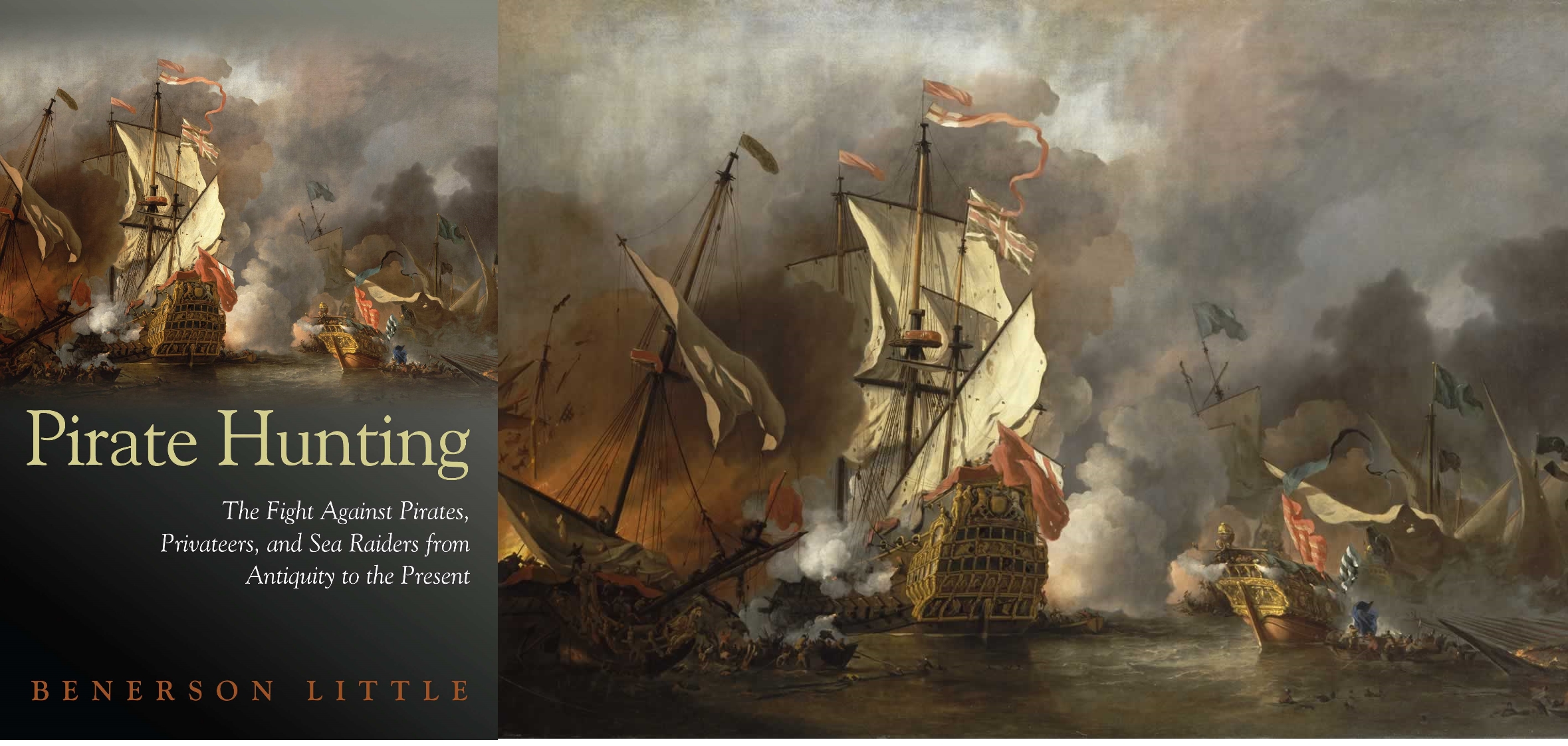
PIRATE HUNTING:
THE FIGHT AGAINST PIRATES, PRIVATEERS, AND SEA RAIDERS
FROM ANTIQUITY TO THE PRESENT
To catch a predator—on the high seas.
For thousands of years pirates, privateers, and sea raiding peoples have terrorized the ocean voyager and coastal inhabitant, plundering ship and shore with impunity. From the victim’s point of view, these attackers were not the rebellious, romantic rulers of Neptune’s Realm, but savage beasts to be excoriated, and those who went to sea to stop them were heroes.
More than just a vivid account of the war seafarers and pirates have waged, Pirate Hunting is invaluable reading in a world where acts of piracy are once more a significant threat to maritime commerce and voyagers. It will appeal to readers interested in the history of piracy, anti-piracy operations, and in maritime, naval, and military history worldwide.
In print, hardcover and ebooks.
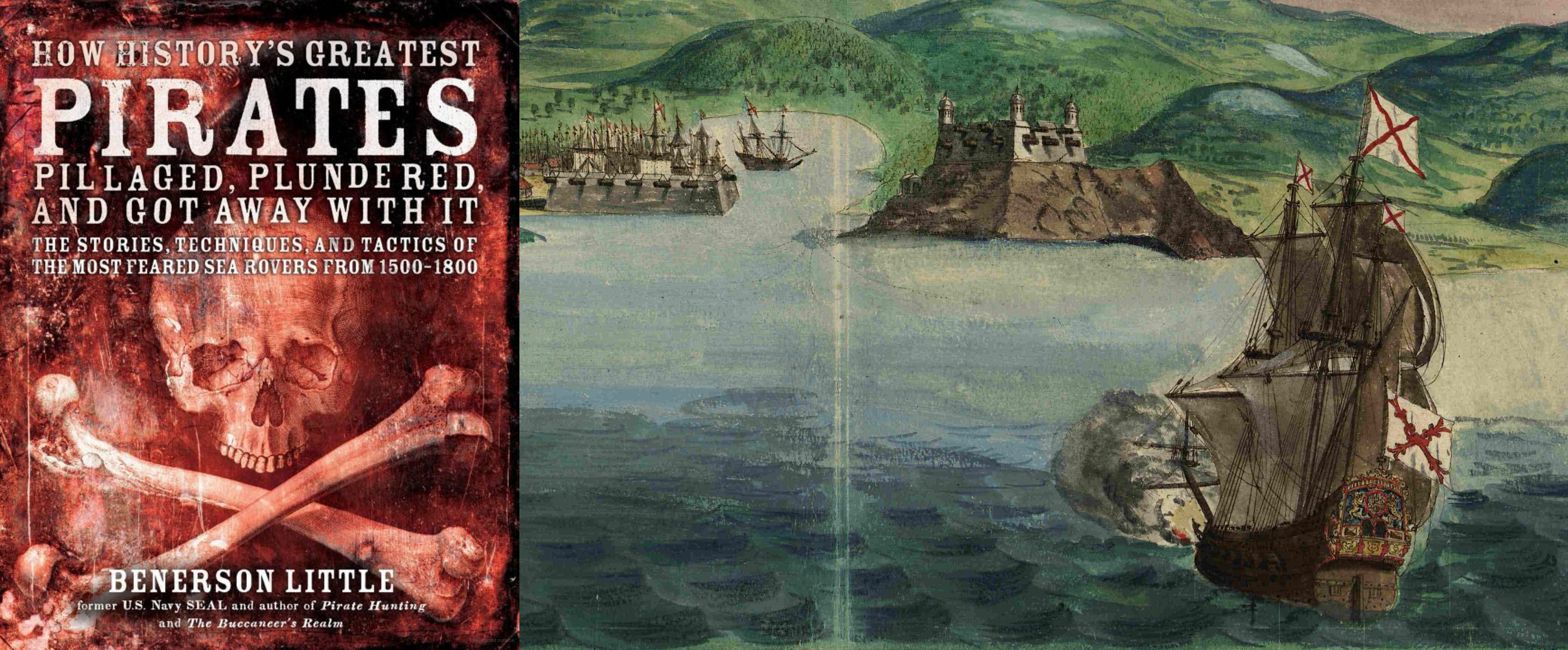
HOW HISTORY’S GREATEST PIRATES PILLAGED,
PLUNDERED, AND GOT AWAY WITH IT
“The author’s background as a former Navy SEAL, his study of black-powder weaponry, his experience as a fencing instructor, and his study of primary evidence make him eminently qualified to write this book.”
Pirates occupy a prominent place in the popular imagination, yet seem to have sprouted from history already larger than life, their true personalities, origins, and objectives obscured by myth and fantasy. Moreover, their military acumen is seldom discussed in conventional histories, and the real reasons for their successes and failures are therefore poorly understood. In this fascinating survey of thirteen of the most famous buccaneers, author and former U.S. Navy SEAL Benerson Little employs his direct experience of seafaring and naval combat tactics to highlight the ingenuity of many of the pirates’ campaigns—and those conducted against them.
In print, trade paper, ebook, and audio editions. The hardcover is out of print.
Articles on Piracy & Swordplay
Forward to By Sword and Tomahawk (2024), a book on the technique and tactics of swordplay and edged weapons during boarding actions, by fight choreographers Dr. John Lennox, Steven Huff, et al.
“Swordplay & Swashbucklers,” an article on cutlasses and swordplay during the Golden Age of Piracy. Published in Barrels & Blades (May 2022), the journal of the Heritage Arms Society Inc.
Forward to the new edition (ebook only, I believe, unfortunately, unlike the first edition) of The Gigantic Book of Pirate Stories compiled and edited by Steve Brennan (Skyhorse Publishing, 2017).
“Las tácticas de los piratas del Caribe” in the Spanish print magazine Desperta Ferro, August 2015.
“El mito pirata” in the Spanish print magazine Desperta Ferro, August 2015.
“Did Pirates Wear Eye Patches?” on the Under the Black Flag website. A brief article debunking popular myths about pirates and eye patches.
“Eyewitness Images of Buccaneers and Their Vessels,” in The Mariner’s Mirror, August 2012. Overlooked eyewitness images of late 17th century buccaneers, perhaps the only eyewitness images in existence of Golden Age sea rovers.
Forthcoming, “Pirate Daughters: In Film and History,” in Pirates Magazine, Issue 15, Summer 2011. Or maybe summer 2012? Or never? Time to submit elsewhere…
“In Defense of Alexandre Exquemelin: The Original and Eternal Buccaneer-Author,” in Pirates Magazine, Issue 14, May 2011.
“The Black Fencer in Western Swordplay,” in American Fencing magazine, vol. 61, no. 1, Spring 2011.
“How to Live Like a Pirate–Without the Murder and Mayhem,” in Interesting Times #6, February 2011.
“The Language of Pirates, Real and Imagined,” in Pirates Magazine, Issue 13, November 2010.
“Terrorists and Pirates Are Similar But Not the Same,” in Piracy on the High Seas, Gale Cengage, 2010. Hardcover and paper editions available. Table of contents link. Originally published on http://mountainrunner.us/, a website covering public diplomacy.
“The Origin of the Dread Pirate Banner: the Jolly Roger,” in Pirates Magazine,” Issue 12, April 2010.
“Scimitars, Swivel Guns, & Firepots: Digging for Pirates in Denmark,” part two, No Quarter Given, July/August 2008 (vol. 15, no. 4).
“Scimitars, Swivel Guns, & Firepots: Digging for Pirates in Denmark,” part one, No Quarter Given, May/June 2008 (vol. 15, no. 3).
“Tidewater Places and Pirates: A Visit to Williamsburg, Jamestown, and Yorktown,” No Quarter Given, May/June 2006 (vol. 13, no. 3).
“A Brief Note on Powder Chests,” No Quarter Given, January 2006 (Vol. 12, no. 6).
“Close Fights at Sea: Boarding Ship-to-Ship 1630-1730,” No Quarter Given, September 2005 (vol. 12, no. 5).
Historical Consulting
HISTORICAL CONSULTANT TO FIRELOCK GAMES for their critically-acclaimed “Blood & Plunder” and “Oak & Iron” miniature war games, a bit for recently-released “Port Royal,” and for their upcoming “The Rise of the Buccaneer,” 2015-present. Assist in developing correct period costumes, arms, and vessels, and advise on period tactics. Also contribute text for the game manuals.
Provided historical consulting for Ubisoft related to marketing and press for game release, and for some post-release game development for Skull and Bones (released February 2024), a game of Indian Ocean piracy, 2022-2024.
Advised in small ways on elements of history in support of the development of the The Pirate Republic board game by Green Feet Games, 2016-2017, and for its sequel, The Africa Gambit, 2024.
Assisted in historical research for a historical association on Harbour Island, Bahamas, 2016.
HISTORICAL CONSULTANT TO THE STARZ NETWORK’S BLACK SAILS CABLE TELEVISION SERIES, 2012-2016 (all episodes all four seasons).
Assisted author A. C. Crispin in research into pirate lore, swordplay, and dueling for her novel, Pirates of the Caribbean: The Price of Freedom (Disney Editions: 2011).
Provided technical assistance to the “Pirate versus Knight” episode of Spike TV’s “Deadliest Warriors” series November-December 2008.
Worked with Denmark’s Medieval Center on explosives and pyrotechnics used during the Age of Sail. (2007-2008)
Provided assistance and appeared in the “Terror in the Mediterranean” episode and DVD of the History Channel “Digging for the Truth” series, 2007.
Provided assistance and appeared as a piracy expert on “True Caribbean Pirates” television show and DVD, History Channel, 2006.
Provided expertise on sea survival during the Age of Sail for the book The Worst-Case Scenario Almanac: History by Joshua Piven et al. (San Francisco: Chronicle Books, 2006.)
Provided occasional technical assistance on various projects in development, including television productions.
Various Lectures, Talks, Podcasts, Interviews, &c
Interviewed for and quoted in 9 Things Real-Life Pirates Ate On The High Seas by Julia Lauzon for The Takeout, May 31, 2026.
Podcast interview with Gunpowder and Gold on the subject of 17th century buccaneers and modern Marine tactics compared. Again, lots of fun!
Podcast interview with Gunpowder and Gold on the subject of authenticity in video games. A lot of fun! March 6, 2026. Online on YouTube.
Gave seminars on “Writing About Piracy” and “Blogging for Book Authors” at the Laura (Riding) Jackson Foundation in Vero Beach, Florida on February 22, 2025. (My many thanks to Capt. Michael R. Howard, USN, Ret., & Sara Wilson.)
Historical consultant on a Ubisoft panel at an international press conference in advance of the release of the Skull and Bones video game, February 5, 2024.
Interviewed by Rod Quinn of ABC Overnight Radio (Australian Broadcast Corporation) on the subject of piracy on June 8, 2023 (US) / June 9, 2023 (Australia). Great interviewer! The interview if you can find it (the link is dead) begins at the two hour mark.
Interviewed on The Piratical Podcast (now Gold and Gunpowder) on December 31, 2022 on the subject of writing Sea Rover fiction.
Gave a series of three one-and-a-half-hour lectures (August 12, 19, & 26, 2022) on “Pirates of the Caribbean” for LearningQuest in Huntsville, Alabama. Part One: The Buccaneers; Part Two: The Red Sea and Black Flag Pirates; Part Three, Pirates in Fiction, Film, and More!
Interviewed on The Piratical Podcast (now Gold and Gunpowder) on January 9, 2022, on the subjects of Black Sails and More!
Steaphen Fick–owner and head instructor at Davenriche European Martial Artes in San Jose, not to mention an expert on practical historical swordplay, the best authority I know on fencing in armor, a true gentleman, and a genuinely nice person–interviewed me on the subjects of piracy, Black Sails, Firelock Games, swordplay, and more, 2021. Interview on YouTube.
Interviewed along with Mike Tuñez of Firelock Games by Liz Davidson for her “Beyond Solitaire” Podcast, December 14, 2020, on the subject of Firelock’s Blood & Plunder tabletop wargame.
Spoke on the subject of sea roving sea tactics, with emphasis on boarding actions, for CyberWars, hosted by HMGS and No Dice No Glory Games on November 14, 2020: The Tactics of Boarding Actions.
Spoke on the subject of The Golden Age of Piracy for the CyberWars virtual convention on July 24, 2020.
“Parrots, Patches, and Plunder”–Lectured and answered questions for more than an hour at the University of Alabama in Huntsville in honor of Talk Like a Pirate Day, 19 September 2019.
Lectured for two hours on “The History and Practice of Modern Western Swordplay” for LearningQUEST at the Huntsville Library, September 16, 2019.
Special Guest on 200th Podcast of Under the Crossbones, July 23, 2019.
Interviewed for “When Teens Fight with Swords…and It’s Awesome!” by Kelli Pavlovec for Rocket City Mom, June 2019. The subject was fencing for teenagers.
Guest on The NonSequitur Show podcast 19 September 2018, in honor of Talk Like a Pirate Day: “The Pirate Life: Arrrrghhhn’t Ye Glad We’re Back? “
Interviewed for a German article on keelhauling by Sylvia Tyburski, June 2018.
Long interview on the subjects of pirate tactics and of the need for “hands on” experience in the study of history, on Mark Hatmaker’s excellent “Indigenous Ability: Examining & Resurrecting Indigenous Skills and Frontier Rough & Tumble Combat” blog: A Conversation With Pirate Historian Ben Little.
Interviewed for and quoted in How to Use a Baby Wrap the Best Way Possible by Matthew Utley. That is, how a Navy SEAL might do it…
Youtube interview by Milwaukee Atheists, on the subject of piracy: Benerson Little Interview.
Interviewed for and quoted in articles on pirate myths in the German television and film magazines Hörzu and TV DIGITAL, April 2017, for publication in the spring and fall 2017.
Interviewed for and quoted in “Pirates of the Gulf Coast” by D. Fran Morley, published in Condo Owner magazine, Winter 2017.
Lectured for two hours on pirate and privateer tactics during the Golden Age of Piracy at Historicon 2017 at Fredericksburg, Virginia, on behalf of Firelock Games.
Provided on air historical context during the last quarter hour of NPR’s On Point show on April 4, 2017, featuring Laura Sook Duncombe on the subject of her book on women pirates.
Interviewed live on the Buck Sexton Radio Show, January 20, 2017, on the subjects of The Golden Age of Piracyand Black Sails.
Written interview and quotes for a Danish Broadcasting radio and Internet piece on Black Sails, March 2016.
Under the Crossbones Podcast Interview first broadcast on April 12, 2016.
Spoke to and answered questions of James Clemens High School students in Mary Crouch’s homeroom on April 7, 2016, on the various subjects of Navy SEALs, writing, and on not being afraid to try and fail–and of then getting up and trying again.
Lectured and answered questions at the Decatur Public Library, Decatur, Alabama, September 17, 2015. Wonderful staff and audience!
Interviewed for and quoted in No’Ala Huntsville magazine Nov-Dec 2013, as part of a feature on the Huntsville Fencing Club.
Interviewed for al.Com and The Huntsville Times in September 2013 as part of three short articles on the subject of piracy and treasure in Alabama, and on pirate language: “Arrr there pirate tales from Alabama?”, “Aye! Alabama is booty-licious…”, and Avast, me hearties! by Kelly Kazek.
Answered questions for sixteen hours for a reddit “Ask Historians” AMA on “Piracy from Antiquity to the Present,” June 5, 2013. Excellent questions!
Author interview, mostly fencing-related, on the Cs Vintage Co e-magazine website, 2013.
Author interview posted on the Under the Black Flag website, 2013.
Lectured at the Science Museum of Minnesota in St. Paul on June 28, on the subject of “Hollywood and Pirates: Truth Versus Legend.” The lecture was part of a series associated with the Whydah / National Geographic “Real Pirates: The Untold Story of the Whydah from Slave Ship to Pirate Ship.” Wonderful staff and audience!
Lectured on “Pirate Boarding Tactics: Hollywood Versus Reality” on September 17, 2011 at the Fountain of Youth Archaeological Park during Tiger Lee’s “Hot Pirate Babes Calendar / Talk Like a Pirate Day” weekend in St. Augustine.
Appeared on three discussion panels during during CombatCon 2011 in Las Vegas, June 24-27: “Boarding Tactics and Techniques for the Golden Age of Sail,” “Weapons and Wounds [in Western martial arts],” and “Deadliest Warrior: Behind the Scenes.”
Spoke on the subject of piracy as a business model to the Rotary Club of Greater Huntsville on November 10, 2010.
Interviewed as part of an article on the Huntsville Fencing Club in The Huntsville Times, March 22, 2010 by Mary Anne Swanstrom.
Lectured on “Piracy as a Business Enterprise” (and for a few minutes on piracy in general) for the Huntsville Affiliate of the Institute of Supply Management (ISM) on February 11, 2010.
Lectured on “Piracy from Antiquity to the Present Day” on February 3, 2010, at the University of Alabama in Huntsville Osher Lifelong Learning Institute.
Spoke on the subject of piracy in general on November 19 in Huntsville, Alabama at J H Partners, an architecture firm with the excellent, even Renaissance, habit of inviting speakers not in any way associated with the firm’s business or purpose.
Lectured on piracy past and present at the National Navy UDT-SEAL Museum, September 2009, the lecture was video-taped and is online via St. Lucie County Television (SLCTV), Florida.
Appeared on the “Murderous Queens, A Lost Continent, & Swashbuckling Pirates: Truth & Fiction in History” panel with authors David King, Robert A. Prather, and Robert McCammon at the Southern Kentucky Book Festival, April 19, 2008.
Interviewed as part of an article on the Huntsville Fencing Club in The Huntsville Times, October 4, 2007 by Ann Marie Martin.
Author interview in The Huntsville Times, September 20, 2007, by Ann Marie Martin.
Television Appearances
Taped an Alabama Detours episode produced by WUVA of the University of Alabama and directed by Rhys Butler, to air 2014: Benerson Little Pirate Historian.
Appeared on several STARZ preview shows and videos in 2013 and 2014, including The Take, episodes 108 and 109, on the subject of piracy past and present, in regard to the film Captain Phillips and the forthcoming Black Sails series, as well as Black Sails: An Inside Look and a few trivia videos as well. Footage included on some of the DVD and Blu-ray extras.
Subject matter expert and commentator in the “Terror in the Mediterranean” episode and DVD of the History Channel “Digging for the Truth” series, 2007.
Commentator on “True Caribbean Pirates” television show and DVD, History Channel, 2006.

